What roles do aspirations and capabilities play in academic mobilities?
- Tugay Durak
Drawing on 50 semi-structured interviews with UK-based Turkish academics, this seminar examines how aspirations and capabilities shape international academic mobilities across time and space. While academic mobility has often been explained through functionalist approaches, particularly human/social capital theories and push–pull frameworks, such accounts can imply that individuals respond uniformly to external conditions and may understate the interplay between agency, structure, and differentiated freedoms.
Framed through the aspirations–capabilities approach, this study conceptualises academic mobility as a function of academics’ evolving aspirations and uneven capabilities, continually recalibrated within perceived opportunity structures across national, institutional, career, and life-course contexts. The findings show that aspirations to build international academic careers are not fixed from the outset but are gradually formed and revised through education, exposure, institutional encounters, and changing understandings of the “ideal” academic and personal life. Capabilities, in turn, shape whether these aspirations can be realised: internationally legible credentials, research networks, language skills, doctoral and postdoctoral mobility, visa routes, and access to academic labour markets expand possibilities, while political constraints, limited academic freedom, gendered expectations, family responsibilities, and employment insecurity restrict them. By focusing on UK-based Turkish academics, the seminar shows how academic mobility emerges from the dynamic relationship between subjective aspirations and differentiated capabilities, explaining why similar structural conditions can produce divergent mobility trajectories across time and space.
This webinar is chaired by Olga Mun, a senior doctoral student at the department, and a member of CGHE
Booking
Event Notes
Please find the General Privacy Policy of UCL, one of our partner universities, here: https://www.ucl.ac.uk/legal-services/privacy/general-privacy-notice.
Share this event


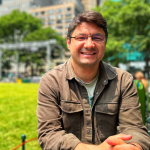
Tugay Durak holds a PhD in Higher Education from the UCL Institute of Education, where he is also an Honorary Research Fellow. In April 2025, Dr Durak joined nccr—on the move — the Swiss National Centre of Competence in Research on Migration and Mobility — at the University of Neuchâtel, first as a Visiting Fellow and later as an Associate Researcher working on the ACAMOB project. Previously, Dr Durak held visiting positions at Boston College, Yale University, and the University of Kassel. His work focuses on academic mobility, higher education expansion, international scholarships, and knowledge diasporas.