Shift shock, liminality and smooth transitions: Learning to be a vice-chancellor before and after getting the job
- Professor Nic Beech, University of Salford
Event Materials
This event is now archived and we are pleased to provide the following event media and assets, along with the original event overview.
What do vice-chancellors need to learn in order to do their job, and how do they learn it? As in many industries and types of organisation, becoming a university leader entails a series of job changes which is typified by a broadening span of responsibility and a succession of steps which take the person further away from the expertise that was central in them being appointed into, and then promoted within, university structures. One typification of this is that as the span increases, the leader becomes ever more generalist and less of an expert. An alternative view, drawing on Practice Theory, is that vice-chancellors need to learn the particular practices of the role which include both organisational and academic leadership, and the tensions inherent between those practices. Moving into the role can be a significant disjuncture for some, a liminal process or a smoother transition. The practices of being a vice-chancellor include decisional and cognitive elements but also include embodiment, emotion and public-facing representation of the university to multiple (and potentially conflicting) groups.
This study draws on an autoethnography of becoming a vice-chancellor and also interviews with 40 of the 120 mid and large sized universities who are members of Universities UK. Drawing on insights from these data, the seminar explores the learning that people did on the way to becoming a vice-chancellor, their experience of doing the job and what it was actually like, and the subsequent learning that they undertook.
Booking
Event Notes
Please find the General Privacy Policy of UCL, one of our partner universities, here.
Share this event


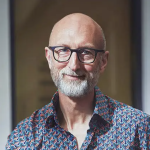
Professor Nic Beech is Vice-Chancellor of the University of Salford and was previously the Vice-Chancellor of Middlesex University and a Vice-Principal of the University of St Andrews. He is Chair of the Quality Council for UK Higher Education and of Student Minds. He is a part-time doctoral student at the Institute of Education, UCL.