Writing across borders
There is something special about being in a room with early-career researchers (ECRs) who have travelled from different parts of the world, carrying with them different academic traditions, research questions, experiences and aspirations, yet sharing a common desire to learn.
I had the opportunity to attend the CGHE Autumn School 2026: How to Write About Higher Education, held at the Department of Education at the University of Oxford and organised by Professor David Mills, alongside facilitators Lauren Clark, Ben Mulvey and Lee Rensimer. Across two intensive days, the Autumn School created space not only to think about writing, publishing and research, but also about what it means to participate in higher education as scholars working across different contexts. For me, as a scholar from the Global South, the experience was particularly meaningful.
More than a writing workshop
At first glance, the programme was about writing: writing reflections, making research connections, publishing, dissemination, impact and grant writing. But the Autumn School quickly revealed itself to be about much more than putting words on a page. It was about learning how to find and communicate the significance of our research. It was about understanding where our ideas sit within wider conversations in higher education. And, importantly, it was about creating a community in which ECRs could ask questions, share uncertainties and learn from one another.
The programme moved deliberately between individual reflection, small-group discussion, presentations, workshops and informal conversations. This made the experience feel less like a conventional training programme and more like a scholarly community in motion.
One of the most memorable aspects of the Autumn School was meeting ECRs from different parts of the world. We arrived with different research interests and different experiences of higher education. Yet the conversations continually revealed connections between our contexts. There was an eagerness to learn that was infectious. People were generous with their ideas, questions and experiences. The diversity of perspectives also reminded me that higher education cannot be understood from a single geographical or intellectual vantage point.
For scholars from the Global South, this matters deeply. Our research contexts are often shaped by histories, institutions and inequalities that do not always fit neatly into dominant academic conversations. Being in a space where different experiences could be brought into conversation created an opportunity to think about how we write ourselves and our research into global higher education debates.
Learning to write and to think differently
The first day began with Lauren Clark’s session, “Good Day, Bad Day: Writing Reflections.” It invited us to think about writing not simply as a technical skill but as a practice of reflection. Ben Mulvey’s “Making Research Connections” workshop then encouraged us to consider how our research connects to broader questions and conversations. The afternoon continued with small-group research presentations, followed by David Mills’ session, “Publish and…? Reflections on dissemination and impact.”
I appreciated this structure’s movement between doing and reflecting. We were not simply being told how to write. We were encouraged to think about why we write, whom we write for, how research travels and what happens to our ideas after publication. The conversations continued beyond the seminar room, including over dinner and informal exchanges. These moments were just as important as the formal sessions because they allowed relationships to develop organically.
Academic freedom beyond borders
One of the highlights for me was Ben Mulvey’s presentation during the CGHE webinar. His emphasis on universal academic freedom resonated strongly with me. Academic freedom is often discussed as an abstract principle, but the Autumn School made it feel much more tangible. The ability to ask difficult questions, pursue knowledge, challenge established assumptions and communicate research across borders is fundamental to the work of scholars everywhere. Ben’s emphasis also connected with something I experienced throughout the Autumn School itself: an effort to create a scholarly space that could harbour authors and researchers from different parts of the world. For me, this was particularly significant as a Global South scholar. A genuinely global academic community cannot simply mean inviting scholars from different countries into existing structures. It also requires creating spaces where different experiences, intellectual traditions and forms of knowledge are taken seriously. Academic freedom, therefore, has a geographical dimension. It matters not only whether scholars are free to speak and research, but also whose questions are heard, whose knowledge is recognised and whose experiences are allowed to shape academic conversations.
The second day opened with “Negotiating the postdoctoral years,” a conversation with Mohini Gupta and Uma Pradhan. For ECRs, the postdoctoral period can feel like a particularly uncertain stage of academic life. Questions about publishing, grants, academic identity, career trajectories and finding one’s place within the academy can feel overwhelming. Having an honest conversation about these experiences was valuable because it made visible some of the realities behind academic careers.
The session reminded me that academic development is not always a straight line. There are uncertainties, negotiations, and moments of questioning. Yet there are also opportunities to build intellectual communities and discover new directions.
Research as a collective exercise
The research sandpit discussion was another reminder that research does not have to be a solitary activity. Working through ideas collectively allows researchers to see possibilities that may not be immediately visible when working alone. A question can be reframed. An argument can be strengthened. A research idea can become a collaboration. This spirit carried through into the grant-writing session later that afternoon. “Grant Writing 101” took us into the practical world of successful grants, outlines, and research funding. For ECRs, this was particularly useful because grant writing can sometimes appear mysterious from the outside. Breaking it down into smaller tasks made the process feel more approachable.
One of the things that made the Autumn School memorable was that learning did not stop when the formal sessions ended. There were conversations over coffee. There were discussions over lunch. There were reflections over dinner. These informal spaces mattered because academic communities are built through relationships as much as through formal intellectual exchange. The programme’s social dimensions created opportunities to get to know the people behind the research questions, to hear about different academic journeys, institutions and countries, and to discover the common experiences that connect researchers despite geographical distance.
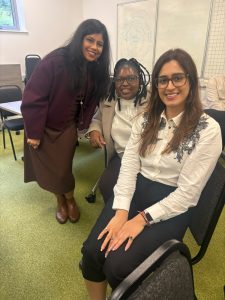
Judith (in the middle) with colleagues
What does it mean to write as a Global South scholar?
I left Oxford thinking not only about how to write better, but about where I write from and what that position makes possible. Being a Global South scholar means participating in academic conversations that have often been shaped by institutions and traditions elsewhere. It also means bringing experiences and questions that can complicate established narratives about higher education. The Autumn School encouraged me to think about writing as an opportunity to make those connections visible. Writing about higher education is therefore never only about producing an academic text. It can also be about making particular experiences visible, challenging assumptions, building connections and contributing to conversations that cross institutional and national boundaries.
Looking back at the two days, perhaps the most important lesson was embedded in the design of the programme itself. The Autumn School brought together reflection, research presentations, writing, publishing, academic freedom, postdoctoral conversations, grant writing and social interaction. Each component created a different route into the broader question of how we participate in academic life. The experience demonstrated that supporting ECRs is not simply about teaching them how to publish more papers or write stronger grant proposals. It is also about creating communities in which emerging scholars feel that their questions matter. It is about making room for different voices. And it is about recognising that academic knowledge is strengthened when scholars can encounter perspectives beyond their own.
As I returned from Oxford, I found myself thinking about the ECRs I met, the conversations we shared, and the questions that remain beyond the two-day programme. The Autumn School may have been titled “How to Write About Higher Education,” but for me, it offered a broader lesson: writing about higher education is also about thinking critically about the higher education system itself. Who gets to write? Who gets heard? Whose experiences shape the conversation? And how can academic spaces become more open to scholars and forms of knowledge from across the world? These are questions worth carrying beyond Oxford.
The Autumn School created a space where scholars from different parts of the world could learn together, question together and imagine possibilities together. As a Global South scholar, I valued the opportunity to be part of that conversation, and I left with not only new ideas about writing and research, but also a renewed appreciation of the importance of academic freedom, intellectual community and truly global scholarly conversations. Perhaps that is one of the most valuable things an Autumn School can offer: not simply answers about how to write, but a community that gives us more questions worth writing about.
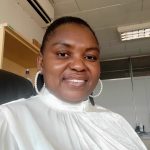
Written by Judith Sikala, University of the Free State, South Africa
Share this blog post